Published by Modern Dating Guide
Start with the job each photo must do
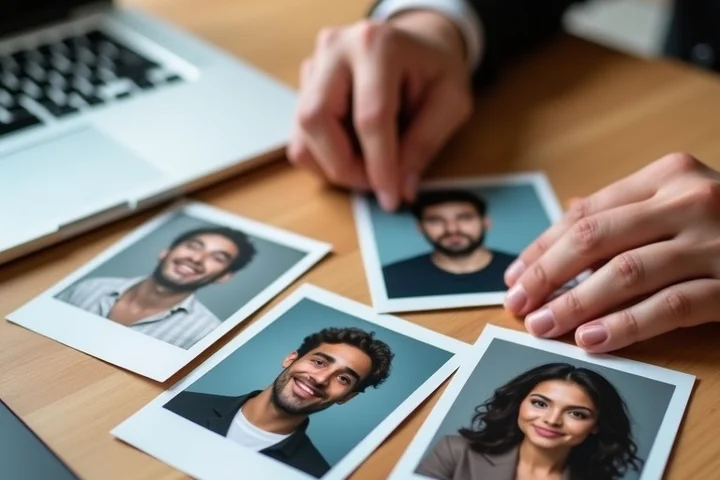
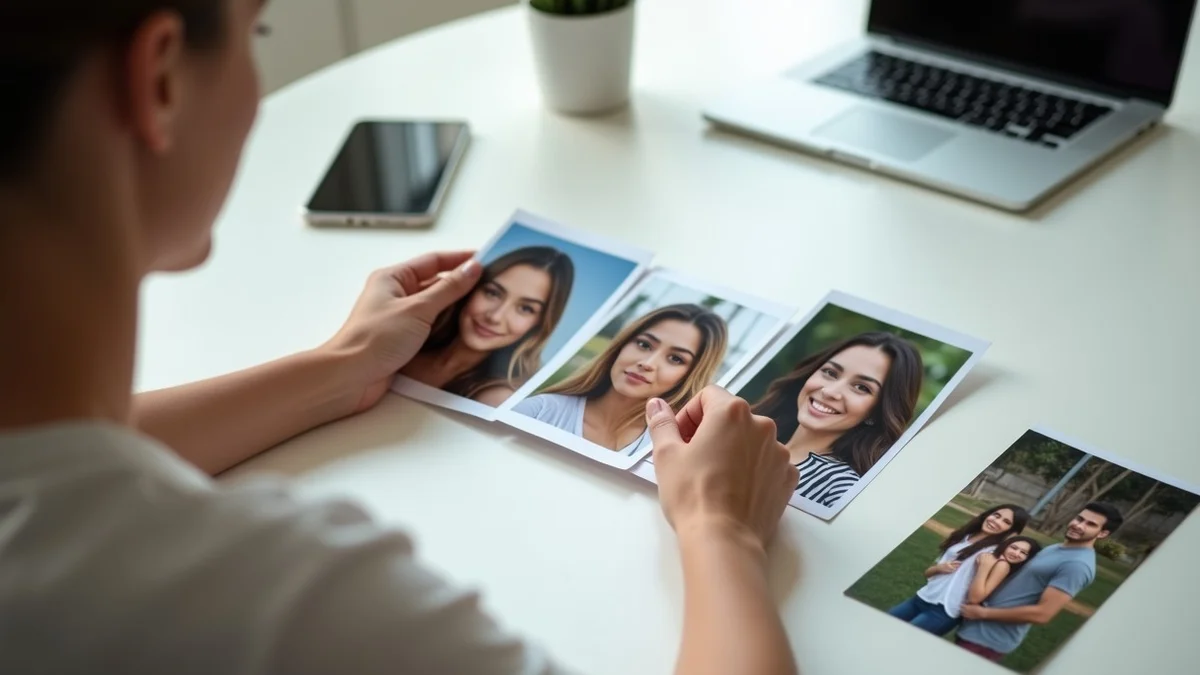
People building profiles for Tinder, Bumble, Hinge, or OkCupid benefit most from assigning a distinct job to every image before selecting favorites. Put identity first, then add everyday setting, an activity, social life, and a second current view. This order prevents a polished but repetitive set from obscuring the person behind it. A compact selection brief also exposes gaps: five restaurant photos describe one evening, while a face-forward image plus varied scenes describes a person.
The lead photo should make identification easy
Face visibility, recency, and subject isolation decide the opener. A clear solo image in daylight or even indoor light, with the face unobscured, carries less interpretive work than a sports, travel, or group scene. Natural expression matters because a posed look still needs to resemble the person encountered offline. Cropped distant photos lose even when their setting is memorable.
| Lead Photo Option | Opening Slot Decision | Reason |
|---|---|---|
| Solo photo with the face clearly visible | Best choice | One person, current features, and a readable expression establish identity immediately. |
| Action or travel photo from a distance | Move later | The setting adds personality, yet the small subject makes recognition harder. |
| Group photo | Do not lead with it | A viewer must first determine which person owns the profile. |
| Filtered, shadowed, or sunglasses-heavy portrait | Replace when possible | Face detail and current appearance remain unclear. |
Supporting photos can show real contexts without repeating the same pose
Later photos work best when each supplies information the lead image lacks. An activity image shows how someone spends time; an everyday photo in different clothes confirms current appearance across settings; a social image suggests connection to other people. Every frame still needs a recognizable subject, since personality stops helping once the viewer has to search for the profile owner.
Hinge describes personalized profiles that include prompt answers and interaction with profile elements, so a specific supporting image has room to add visual detail without forcing the first photo to carry every part of the presentation. A cooking photo, a trail photo, or a candid image at a neighborhood event works when the person remains visible and the scene reflects real life. Repeated mirror poses, near-identical nights out, and several photos from one vacation spend multiple slots on the same information.
Group shots, selfies, and old images need strict limits
Group photos belong after clear solo images, appear once at most, and should identify the profile owner without comparison or explanation. A selfie earns a place when it is well lit, recent, and unlike the other photos; several selfies narrow the lineup to one angle and one setting. Old images become poor representations when hairstyle, facial hair, glasses, body, style, or general age presentation has changed. Heavy retouching creates the same problem by presenting a face that will not match a current meeting.
Crop, sequence, and review the final lineup
Cropping should preserve the face and enough of the setting to explain the image. Tight crops suit the lead slot, while a later activity image needs enough surrounding detail to show what is happening. Remove photos with another person cut awkwardly at the edge, a cluttered background competing with the face, or a subject reduced to a tiny part of the frame.
Sequence follows the viewer’s basic task: identify the person, see another current view, then learn about daily life and social context. One effective five-image order is a clear solo portrait, a fuller-view casual image, an activity scene, a restrained group shot, and a relaxed everyday photo. Phone-screen review matters because a photo that looks fine in a camera roll often loses face detail or context at profile size.
Completion check: the profile looks current and recognizable
- Check: Lead-image clarity Standard: The first image shows one identifiable person with an unobscured, current face.
- Check: Current representation Standard: Hair, facial hair, glasses, style, and overall appearance align with how the person looks now.
- Check: Distinct photo roles Standard: Later images add an activity, setting, social context, or second everyday view without duplicating the opener.
- Check: Group and selfie limits Standard: No image makes the viewer guess who owns the profile, and repeated self-portraits do not dominate the sequence.
- Check: Final removal test Standard: Every remaining photo stands on its own at phone size and needs no explanation to make sense.
Where the factual details come from
- What is Hinge? — Hinge
- Tinder official website — Tinder
- Bumble official website — Bumble
- Hinge official website — Hinge
- OkCupid official website — OkCupid
- Bumble Date — Bumble